Tuesday, June 27, 2023

Bike shoe tension


There is a simple way to keep your feet comfortable while improving your pedaling efficiency at the same time. By loosening the straps on your shoes you may find yourself pedaling more efficiently than ever before. Here are some thoughts/ideas and how this can be achieved.

Too often people buy bike shoes that are very narrow and tighten them as if they are wearing hockey skates. This can cut off circulation and squeeze the bones of a foot together causing any number or foot injuries'  or at least numb feet. A simple suggestion is to buy bike shoes a half size larger and search for ones that have a wide enough toe box.  If you live in a warm climate your feet are going to swell during longer rides so a larger size is warranted, and if you live in a colder climate you need to make sure you allow for extra room for thicker or warmer socks during the cooler/colder winter months. Make sure to adjust tension every hour of riding to accommodate for swelling. Bike shoes are often narrow so a simple shoe stretcher could be used to widen out the toe box if needed.

The best way to start this process is when you doing workouts on your indoor trainer. Loosen the straps a little bit at a time. If you find your feet moving around inside the shoe then you may not be applying force to the pedal efficiently. With practice, you will learn to relax and unweight the foot on the upstroke you find a better connection to the pedal if you give yourself a bit of time to work with this.

Next, do this during your easier road rides.  Play with different tensions to find one that feels right. Over time you will find the optimal tension to relax the feet given enough room and allow for optimal power transmission.

You just might find your riding better and more comfortable without numb or cramped feet.

Monday, June 26, 2023

Hot Tubs- A Secret Training Weapon


I've always viewed hot tubs as a great great way to relax and recover. When I started my career in the health and fitness industry in the late 80s, I'd end my swims in the hot tub to warm up and recover. It wasn't until a year ago that I decided to get one for home to enhance recovery and improve sleep.

The new type of hot tubs which are called plug and play are fantastic. All you have to do is fill them up and plug them in and they are self-contained, and provide all the features of much more expensive versions.

Once it arrived, i just filled it up and plugged it in. I use it every evening for 10 to 15 minutes as part of my wind-down /sleeper routine. This has worked tremendously, but along the way, I have found some  added benefits which have made this even more valuable to my training and recovery.

My daily hot tub sessions have allowed me to get more benefits out of my time spent in the warm water. These include:

Breath Work- With nowhere to go for 10 to 15 minutes, I work on slow relaxed breathing to stimulate the parasympathetic nervous system. This is a nice relaxing way to end the day.

Stretching- while in the hot tub, I can do a variety of stretches and work on flexibility.

Trigger Point Work- After completing my breathing exercises I can often use my thumb and work on the calfs  or any other areas in my lower leg that seems to be tight.

Meditation- Although I really haven't delved into this as of yet I feel like the hot tub with the sound of the bubbles e is a perfect place to work on meditating.

Hot water immersion is a proven method to heat acclimate. Living in the warm humid weather of Florida, the ability to heat acclimate not only makes life more comfortable but allows me to train and compete at a safer level. Two to three times per week after key run workouts when my core temperature is above  102F, I will immediately jump into the hot tub with a temperature of 105F for 10 to 15 minutes. Unlike my evening routines, this is not so comfortable. I have found after a couple weeks, my heat tolerance in training is enhanced.

I now view my hot tub as an essential part of my training. I hate missing a session due to thunderstorms, as it has become an integral part of my training, recovery,
and sleep routines.


Wednesday, June 21, 2023

Incline Tempo Runs on Treadmills

 If you want to build muscular endurance and reduce the impact stress on the legs, then incline tempo runs on the treadmill might be your answer. This is a workout format I have recently begun experimenting with. As an expert and contributor on any question, I often love asking questions of other experts I have read and respect. A workout that piqued my interest was an uphill tempo workout that I saw posted by elite running coach Brad Hudson. This workout calls for a 4 to 5-mile uphill tempo effort. Unfortunately, this is not available to most people unless you live in the mountains and have a nice long uphill for 5 miles. But I did like the purpose of the workout and think it would be very valuable for triathletes to develop muscular endurance running off the bike without beating up the legs.

The treadmill became the best place to execute this workout for many reasons. First, it would allow us to lock in the speed and the grade and go for either distance or duration. By locking in a speed we can settle in and work on running economy and relaxing or ticking off the miles. A 3% grade is a good starting point; even going for 10 or 15 minutes provides a great workout. This can be a great workout done right off of the bike as an uphill transition tempo run of 10 to 20 minutes.

Workout variations

decreasing incline- 5 minutes at 5% grade/ 5 minutes at 4% grade/ 5 minutes at 3% grade. As you lower each grade by one percent, increase the speed by .1 – .2 mph.

Increasing incline- in this variation, you will keep the speed constant while increasing the grade 1% every 5 minutes. This tempo section can range from 15 to 30 minutes.

Broken tempo- in this variation, you will use a 4-minute run/1 minute walk or rest to break up the tempo efforts. This allows you to go a bit longer and hold a higher pace.

The goal of these workouts is not to beat yourself up but to provide a stimulus that will work the legs well while keeping your heart rate at or below your threshold pace/heart rate. It provides a good solid workout but minimal recovery center not pounding your legs. 

Happy Training!


Monday, July 11, 2022

Functional Isometrics for Triatletes


Build Triathlon Specific Strength with Functional Isometrics
Functional Isometrics can be a great way to add some variety to your strength training plan while increasing strength and power within the swim/ bike/ motor patterns. Isometric is defined as the muscle attachment closest and furthest away from the center of gravity maintains a constant length while forces being applied. Functional Isometrics (FI) are used by strength and conditioning coaches in all major sports. By integrating Tri -specific Functional isometrics, triathletes and can achieve higher levels of strength and power exactly where they need it.

There are key positions within the swim/bike/ run patterns that require increases strength or leverage. By incorporating FI into your strength plan, you will develop high levels of isometric strength which will lead to an increase in power and speed.

There are three points during the swim stroke in which isometric would be effective. They are :
1.      High elbow catch position at the beginning of the pull phase

2.      Mid pull phase when hand is at hip level
3.      Extension at back end of stroke.
These isometric exercisers can be done using either a vasa trainer or TRX/ suspension system so that there is no movement when force is applied. Apply 85% effort for 3 to 5 seconds per repetition in each of the three positions. Completing 3 reps per set with a 5 second rest between each repetition. Each set will take 24-50 seconds to complete.
 In cycling the point of highest power application is between the 2 o’clock to 4 o’clock point in the pedal stroke. There are two ways FI can be done in this high power zone.
1.      Rack Pulls-The First method uses a barbell pulled up against the pins in a power rack at knee and hip angles identical to the powerful position on the bike. Again, hold for 3 to 5 seconds per repetition.
2.      Squat or Deadlift with Iso Hold- The second method is to do an isometric hold for 3 seconds at the same joint angle as the rack pull when executing a squat or deadlift. Athletes can use a barbell or hex bar. Hex bars are preferred since it places less stress on the back and knees. Use a controlled eccentric (lowering phase), isometric hold for 3 seconds, then lift weight with a fast acceleration.
In running, there is a point in the stance phase that requires high levels of isometric strength at the point of contact with the ground just before take-off. As with cycling there are two ways this can be accomplished.
1.      Single leg Toes taps- Using a barbell in the back-squat position and standing on one leg in a running posture (knees and hips slightly flexed as if initiating the push off phase of the run stride.) This position is maintained while the athlete does lateral toe touches 4 – 10 repetitions before switching legs.
2.      Rack Single leg Iso Holds- Hold the barbell in the back-squat position and just like the rack pull exercise above. Pushing up against the pins from a single leg running posture. Hold for 3 to 5 seconds per repetition per leg for 3-5 reps per set.
There are several ways you can integrate Functional Isometrics into your strength training plans. Include FI several times through the training year to increase triathlon specific power. Below is one example of how FI can fit into any strength plan.
Tri set A (alternate between the 3 exercises below until all 3 sets are completed)
hex bar deadlift      3 sets of 5 (3 sec isometric holds just off floor on each rep)
Dumbbell chest press 3 sets of 6
Swim isometric (3 positions) 3sets of 3 sec each at 85% effort
Tri set B
Pull up    3 sets of 6
Slide board leg curl  3 sets of 6
Single leg toe taps    3 sets of 5 taps each leg

Tim Crowley is USAT Level III Coach, owner of TC2 Coaching LLC and the Head Strength and Conditioning Coach at Montverde Academy. If you have questions Tim can be contacted at tc2coaching@gmail.com or timcrowley.biz. Tim’s Training Peaks Coaching Profile can be found at https://www.trainingpeaks.com/coach/tc2coaching


Sunday, July 10, 2022

Hot Tubs, Slushies and Heat Acclimation

 My history with training and competing in the heat had not been a good one. I love to train and race in the heat but I had problems with heat exhaustion and cramping once the temperature got over 80°. In 1989 my 2nd Ironman I ended up requiring 11 L of IV and overnight trip to the emergency room before attending the awards ceremony the next morning. The following year I qualified for the wine Ironman and suffered heat exhaustion and went unconscious at mile 18 of the run .The problem living in a northern climate is that it is never hot long enough to fully acclimate.

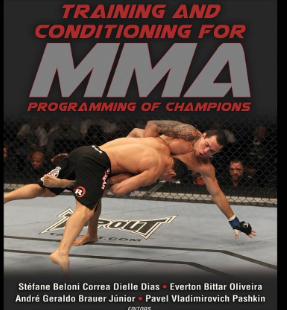
In 2012 when we relocated to the hot and humid environment of Central Florida I wondered if my triathlon career might be coming to a close. I either had to figure this out or suffer and struggle for 8 months of the year. After many hours of research and implementing different strategies, I started to figure it out and came up with a few ideas. This venture into heat acclimation even got me a chance to write about it in the upcoming MMA book to be released in August. 


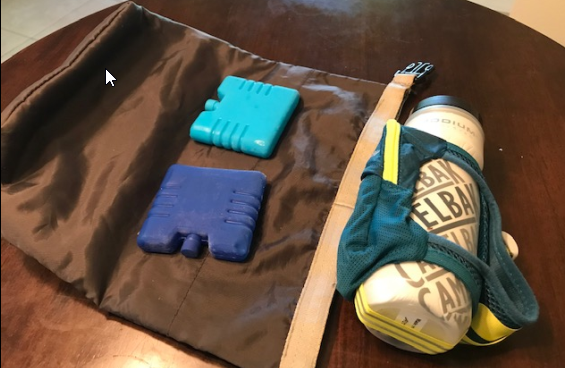
This summer I decided it was time to take it to another level. After researching ways to keep the core temperature in check, I came across the use of slushies that can both keep core temperature down, provide fluid and electrolytes by using Gatorade and electrolyte salts and with the crushed ice feature on the fridge. I started using this during run workouts with good success but needed to figure out how to keep the insulated bottle cold enough to make it to the run  of a triathlon. I figured out that you can make a slushy solution in an insulated bottle, put it in an insulated lunch bag with ice packs and it would last about 2 hours which would allow me to get to the run of the Sprint triathlon. I could leave the bag in transition and after jumping off the bike grab my bottle and off I would go.

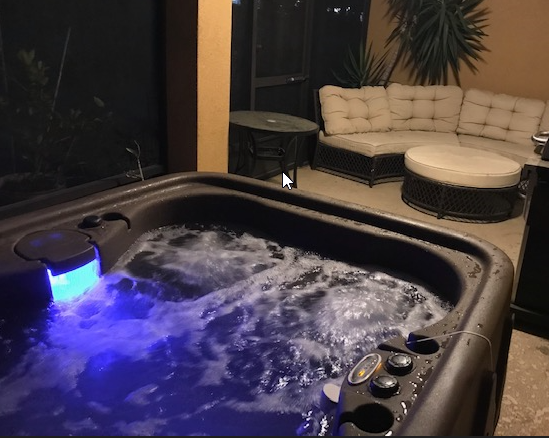
The 2nd part of my heat experiment this year was to installing a hot tub (honestly, I did this for science).  I researched hot water immersion and sauna protocols for heat acclamation. I began using the hot tub each night and using it immediately after hard runs were my core temperature was elevated 3 times a week. This wasn't exactly pleasant but I'm pleased to announce that it seems to be working. After using these techniques for the last few months I have found my training and racing in the hot humid heat of Cleremont to be improving. 


Yesterday I put it to the test and in very hot and humid conditions had a good race with no overheating issues on the run. Upon finishing the race I still had some slush left in my bottle. The next step is to get this to work for Olympic distance race. Stay tuned.

Also more to come on the use of the hot tub not only for heat acclamation but for recovery and improved sleep.


Monday, June 18, 2018

Unique Ways to Heat Acclimate

As the weather heats up, its important to acclimate to heat form optimal performance in both training and racing. Here are a few ways you can optimize heat acclimation into your busy life. When the weather is sporadically hot, its hard to get enough constant exposure to heat to fully acclimate.

1. Do easy training sessions at the hottest times of the day. Keep the intensity and volume low.

2. Do trainer sessions on a hot garage to maximize heat stress. Use a fan to keep the air moving.


3. Mow the lawn or do yard work in the afternoon when its hot and humid.

4. Adopt a road way, and plan to clean it on hot humid days in the Florida sun :)


Tuesday, July 11, 2017

Process outcome and the Masters Athlete-

This is a topic I have been wrestling with for the past 10 years. How can we stay motivated and enjoying a sport we put so much of ourselves into when we know we may not see another PR, or win another race?

If you are new to the sport, ot have been racing for several decades, there will come a time when you will no longer go as fast as you once did. We know we can keep this decline minimal for quite a while, but how we handle it can make all the difference in out outlook toward the sport and lifestyle we love.


Training and racing triathlon is not a zero sum game. The irony is that the sport attracted driven type A personalities, but to be successful, one needs to take a long term view, and as Joshua Medcalf says in his book  Chop Wood/ Carry Water, you need fall in love with the process. As we age as athletes, we can begin to appreciate good health and the ability to push ourselves. Over time there will be a decline in performance, which we cannot control. What we can control is the rate.

I have come to enjoy racing and training more then ever before. I no longer take health and the ability to train for granted.

what i have learned is that when I focus on the process and enjoy it for its own merits, the outcome are almost always favorable. The medals and trophies will collect dust, but the lessones learned out on the road last forever.